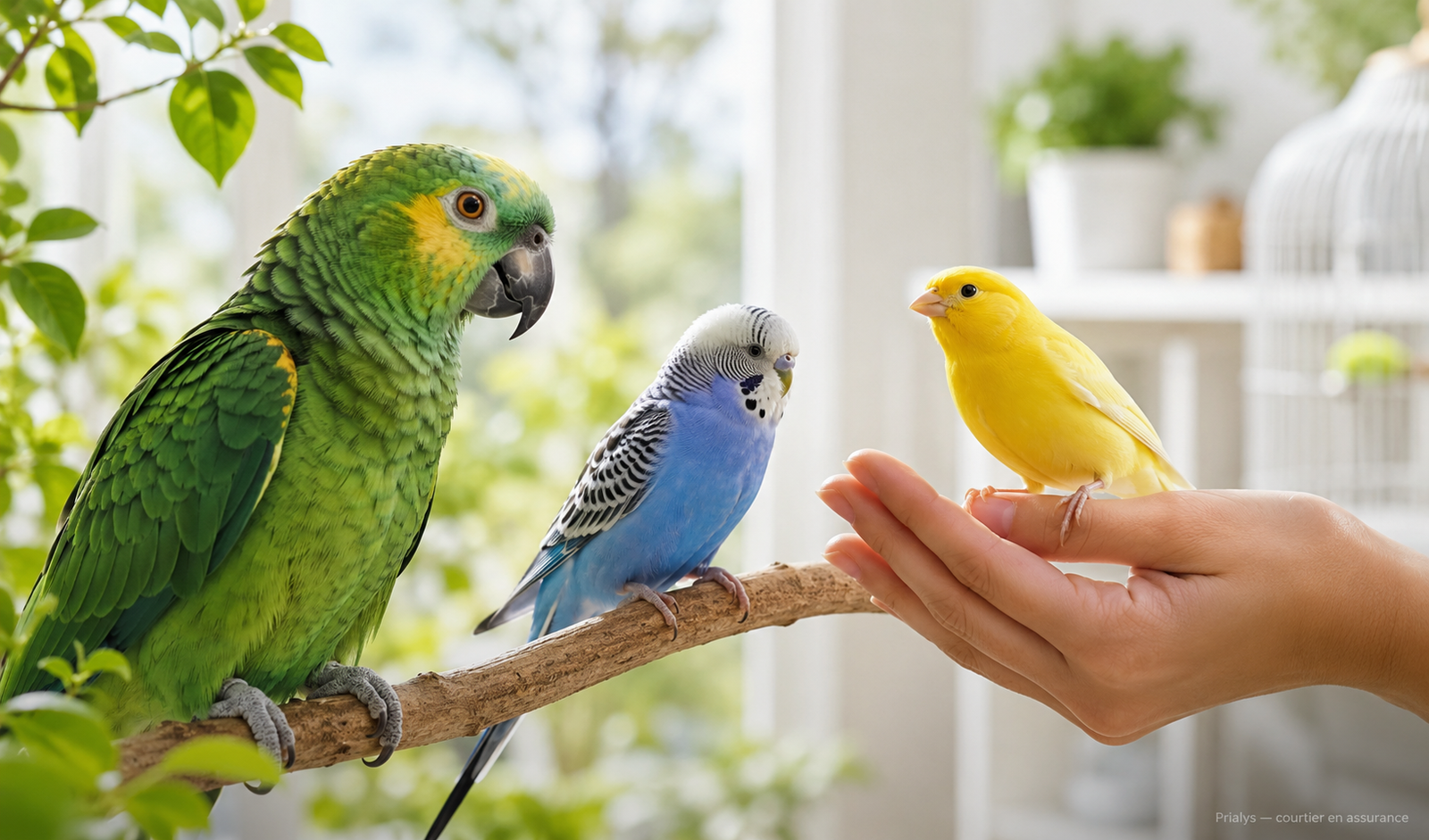
Bird insurance — In France, the only bird for which a veterinary fee policy genuinely exists is the parrot, and it must be ringed. Reimbursement of up to 85 %, annual limit 800 €, annual excess 50 €, and cover can be taken out between 3 months and 10 years of age. For a parakeet, a canary or a lovebird, eligibility is examined case by case and is not guaranteed. Prialys, an independent broker, checks your species before you commit.

  • Freedom of choice: Prialys, independent broker, freely compares market offers for your pet.
  • Savings: benefit from negotiated rates through our broker status and privileged partnerships.
  • Custom coverage: reimbursement rate, annual limit, excess and prevention allowance matched to your bird.
  • Support: a dedicated contact for subscription, management and claims.

Bird Insurance coverage options

ItemWhat the market offers
Species coveredParrot, subject to ringing. Other species: case-by-case review
Reimbursement rateUp to 85 % of the actual veterinary costs
Annual limit800 € per year and per bird
Annual excess50 € per year
Prevention allowance50 € per year, towards serology testing (generally every two years)
Age at subscriptionFrom 3 months to 10 years
IdentificationClosed ring compulsory; CITES paperwork for protected species
Waiting periodsApply, and differ between accident and illness: see the general terms and conditions

Frequent reasons for consultation : psittacosis (chlamydiosis), feather plucking and self-mutilation, beak and feather disease, aspergillosis, egg binding in females, wing and keel injuries, lead or zinc poisoning.

Figures recorded in August 2026 from the French insurers distributing an exotic pet range. They are given for information only and are not a contractual commitment : only the general terms and conditions of the policy apply.

How does bird insurance work?

1. Species – Eligibility of your bird

2. Ringing – Identification and CITES

3. Quote – Rate, limit, prevention

4. Subscription – Electronic signature

5. Claim – Reimbursement from the vet invoice

  • Species check: we confirm with the insurer whether your bird is eligible before anything else.
  • Personalised quote: complete our online form in 2 minutes to receive offers matched to your bird.
  • Comparison: rate, annual limit, excess and prevention allowance compared item by item.
  • Quick subscription: electronic signature, certificate, then reimbursement on presentation of the vet invoice.

Questions? Call us today!

09 52 92 25 30

Brochures

Need detailed information on our pet and exotic pet insurance solutions ? The Prialys team, an independent broker, is available to review your situation and your current policies with you.

What documents to subscribe to your bird insurance?

  • Proof of identity and contact details of the policyholder.
  • Closed ring number of the bird.
  • CITES certificate or transfer document for protected species.
  • Health record, serology results and veterinary certificate where requested.
  • Claims history statement from your previous insurer, if applicable.

Frequently asked questions about bird insurance

ItemDetails
IllnessConsultations, tests, imaging, medication, up to 85 % within the 800 € annual limit.
AccidentWing, beak or keel injuries, falls, burns, emergency care.
Surgery and hospitalisationAnaesthesia, procedure, stay and post-operative care.
Avian consultationsFees of a vet specialising in birds, which are charged at specialist rates.
PreventionSeparate allowance of 50 € per year, towards serology testing.
ItemDetails
Annual excess50 € per year, deducted before any reimbursement.
The uncovered shareThe 15 % of the invoice left outside the 85 % reimbursement rate.
Above the limitAnything beyond 800 € of reimbursement in the same insurance year.
Species not listedCanary, parakeet, lovebird, finch: no published offer, acceptance is not guaranteed.
Bird without a ringNo cover can apply if the bird cannot be formally identified.
Pre-existing conditionsAny illness known or declared before subscription.
Breeding and aviaryEgg and chick losses, and aviary equipment, are not covered by the health policy.

Documents for your bird insurance

Can a bird be insured in France?

The parrot can, under the exotic pet ranges, provided it is ringed. For other birds there is no published offer : eligibility has to be raised with the insurer and examined case by case.

How much is reimbursed?

Up to 85 % of the veterinary fees actually incurred, within an annual limit of 800 €, after deduction of a 50 € annual excess.

Up to what age can cover be taken out?

Between 3 months and 10 years of age — a much wider window than for the ferret or the chinchilla, but still well short of a parrot’s life expectancy.

Is a canary or a parakeet eligible?

Not as a matter of course. These species are absent from the published ranges. We put the question to the insurer with the species, age and value of the bird, and we tell you plainly if the answer is no.

Is the ring compulsory?

Yes for a parrot. A closed ring is what allows the insurer to identify the bird treated, and protected species must also have their CITES certificate.

What is excluded?

Pre-existing conditions, care during the waiting period, breeding-related losses, problems attributable to husbandry, and any bird whose identification cannot be established. The general terms and conditions list the exclusions in full.

Parlons-en

Talk to our broker

Adresse email : contact@prialys.fr
Téléphone : 09 52 92 25 30
Address: Miniparc 3 478, Rue de la Découverte CES 67624, 31670 Labège

    FAQ – Bird Insurance

    Which birds can actually be insured?

    The exotic pet ranges sold in France name the parrot explicitly. Parakeets, canaries, lovebirds and finches are not listed as standard : an insurer may agree to look at them, but there is no published offer and no guarantee of acceptance. That distinction is worth clarifying before you count on being reimbursed.

    Why ringing matters

    Insurers require a closed ring so that the bird treated can be formally identified, and protected species also need their CITES paperwork. Without that identification, a claim cannot be processed, however genuine the veterinary invoice may be.